0731-6777-777, +91 96447-10007/6
 admission@mistindore.com

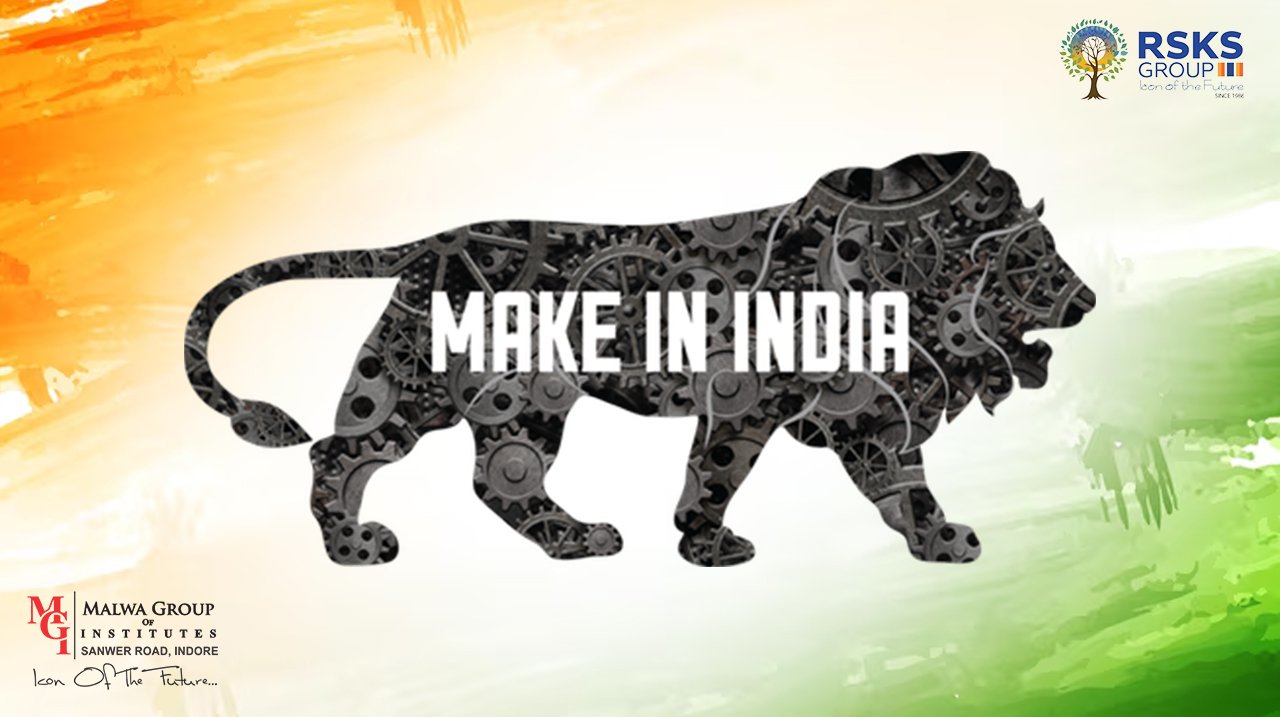

India isn’t just building products anymore. It’s building possibilities.
Launched in September 2014, Make in India isn’t just a campaign — it’s a bold vision that puts India’s entrepreneurial spirit, manufacturing muscle, and youthful energy on the global map. But nearly a decade later, what does “Make in India” truly mean for us — the citizens, creators, workers, and dreamers?
Let’s unpack how this initiative is quietly transforming the country, not just with factories and exports, but with ambition and pride.
🔍 What Make in India Really Stands For
At its core, Make in India is about self-reliance without isolation. It encourages companies — Indian and global — to set up manufacturing units in India, create local jobs, and elevate the country’s capacity to produce world-class goods across sectors like:
- Automobiles
- Electronics
- Textiles
- Pharmaceuticals
- Defense manufacturing
- Renewable energy
But here’s the real story: it’s not just about “making things.” It’s about making change happen.
🚀 Growth Beyond Numbers: Why It Matters
Sure, stats can impress. India became the second-largest mobile phone manufacturer in the world, overtaking Vietnam. The country saw record-breaking FDI inflows across several years post the campaign’s launch.
But the true impact lies in:
- Youth employment: A surge in demand for skilled and semi-skilled labor, especially in Tier-2 and Tier-3 cities.
- Women-led participation: More women entering electronics and textile manufacturing sectors.
- Startup acceleration: Domestic manufacturing reduces reliance on imports, giving startups room to grow and innovate locally.
- Technology transfer: Global companies investing in India are sharing cutting-edge tech with local partners.
This isn’t just economic policy — it’s a human story, unfolding across every town and district.
💡 Real Stories, Real Change
Let’s shift from boardrooms to the ground.
- An engineering student in Nashik now assembles drones for a local startup that ships globally.
- A textile cluster in Surat sees young women leading small manufacturing units for export-quality garments.
- A solar panel plant in Rajasthan not only powers villages but also offers stable jobs to the locals who once migrated seasonally for work.
These stories don’t always make headlines — but they define the success of Make in India.
🧭 The Road Ahead: Challenges & Hope
Of course, it’s not all smooth sailing.
There are still real concerns around:
- Infrastructure bottlenecks
- Bureaucratic delays despite reforms
- Need for skilling a massive workforce
- Sustainability of manufacturing growth
But the vision is alive — and it’s being shaped every day by entrepreneurs, engineers, factory workers, artisans, and policy-makers working in tandem.
🌍 Why the World is Watching
With global supply chains shifting post-pandemic, India stands at a unique crossroads. Businesses looking to diversify from China are seriously exploring India not just as a backup — but as a primary production hub.
Make in India has turned into a global invitation. And the world is responding.
✨ Final Thoughts: It’s More Than a Slogan
Make in India isn’t just about boosting exports or becoming a manufacturing powerhouse. It’s about confidence. It’s about reminding every Indian that we’re capable of building globally respected products right from our soil.
Whether you’re an entrepreneur, student, policymaker, or consumer — this initiative touches your life. And in supporting it, we’re not just creating goods — we’re creating goodness.